Little Panda Policeman
- 4.0
- Rating
- 100.00M
- Installs
- Free
- Price

 Analysis by App-foxy
Little Panda Policeman is an educational game from BabyBus that puts children into the role of a police officer through a friendly panda-led setting. My first impression is that it aims for reassurance rather than drama: the subject could easily become intimidating for a young child, but the presentation keeps the mood approachable and playful. It is free to start, rated Everyone, and sits comfortably among the kind of short, guided activities families often use on a phone or tablet.
What makes it interesting is not simply the police theme. The game turns that theme into a gentle way to talk about helping people, noticing what is happening around you, and responding to everyday situations. I would not treat it as a serious training tool, of course, but I can see why it appeals to children who enjoy uniforms, vehicles, community helpers, and role-play. The store summary describes the idea as discovering what it is like to be a police officer, and that gives the experience a clear identity from the beginning.
A Friendly First Step Into Police Role-Play
When I look at this game as a parent or older sibling might, its strongest opening quality is accessibility. The Little Panda character gives the subject a familiar face, while the educational category signals that the activities are meant to be more than empty tapping. The game is built for children, so the central appeal is immediate: you are not managing a complicated strategy system or trying to master difficult controls. You are stepping into a recognizable community role and learning through simple interaction.
You May Also Like

 AccuWeather: Weather Radar
AccuWeather Review: A Quick, Clear Forecast for Everyday Decisions
For everyday plans, the best forecast is the one you can understand quickly. AccuWeather makes rain timing, radar, and local conditions easy to act on, with a few trade-offs.

 Hill Climb Racing
Why Hill Climb Racing Still Turns Crashes Into One More Run
A tiny car, a bumpy hill and one more upgrade: Hill Climb Racing keeps resurfacing because its simple chaos makes every near-miss feel personal.

 AliExpress - Shopping App
AliExpress Makes Global Shopping Feel Personal, but Shoppers Bear the Risk
AliExpress turns a global marketplace into a pocket-sized discovery engine. Its reach is useful, its shopping loop compelling, and its trade-offs easy to miss.

 Lords Mobile: Kingdom Wars
Lords Mobile Is a Kingdom-Building Routine, Not a Quick Match
A case-by-case verdict on the building, battles, device demands, and social commitments that make Lords Mobile rewarding for some players and exhausting for others.

 PDF Scanner app - TapScanner
TapScanner Makes Paperwork Easier to Capture, Check, and Share
TapScanner makes scanning with a phone feel less like a rescue operation and more like a dependable step in getting work done. Its capture tools are useful, though not flawless.

 Block Blast!
 Shows How Much a Puzzle Game Can Leave Out
A quiet grid game shows why puzzle players increasingly value instant clarity, repeatable skill and low-pressure play—and where the genre still needs to catch up.
More From Our News Desk
View All News


That simplicity is useful in an everyday situation. Imagine a child waiting at a restaurant, sitting through a long journey, or needing a calm activity before bedtime. A short session can offer a change from passive video without demanding the concentration required by a full puzzle game. I would introduce it by asking the child what they think a police officer does to help people, then let the activities provide examples. That makes the game a starting point for conversation rather than something a child simply consumes alone.
The game has been available since May 18, 2017, and its continued visibility is reflected in more than 100 million installs. It holds a 4.0 average from around 156 thousand ratings, which suggests broad interest but also leaves room for individual preferences. Those figures do not tell me whether every child will enjoy it; they do show that this is an established BabyBus title rather than an obscure experiment.
The free entry point is convenient for families who want to test the tone before committing. There are optional purchases priced from $1.99 to $3.99 per item, so I would let an adult handle the device during the first session and check how the child reacts to any locked or optional content. The game may be perfectly suitable as a free activity, but the experience of using it can change if a child becomes focused on unlocking more material.
Why the visual setting matters
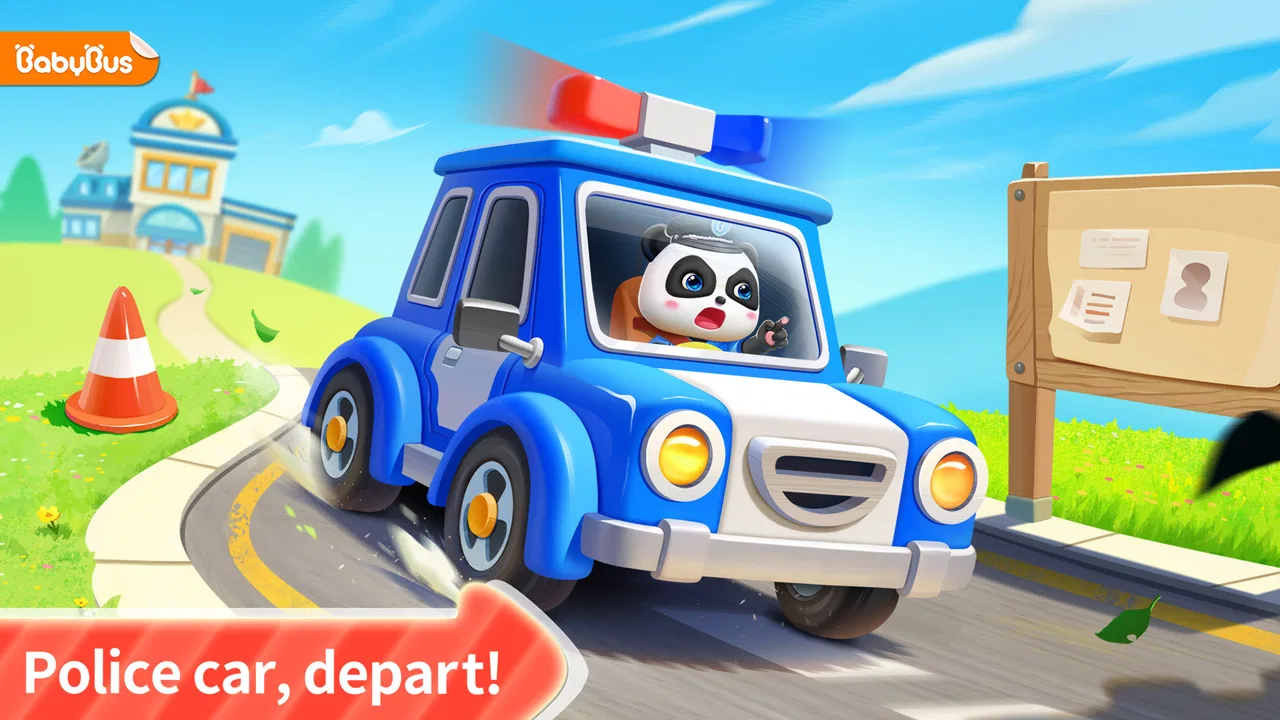
The art direction does important work because the subject involves authority, rules, and emergencies. A realistic police simulation could feel tense or confusing for a preschool-age player. Little Panda Policeman instead uses a softer visual language built around an animal character and a child-friendly world. In my view, that choice lowers the emotional barrier and makes the role feel like imaginative play.
The setting also gives the activities a shared identity. Rather than presenting unrelated mini-games with no connection, the police theme provides a reason for looking, choosing, helping, and reacting. Even when the mechanics are simple, the setting tells the child why the task matters inside the game world. That is a small but meaningful difference from a generic collection of educational exercises.
I especially like this approach for children who are interested in jobs and social roles. A child who already plays with toy ambulances, fire engines, or pretend uniforms may understand the game quickly because the visual world matches their existing imagination. It can also help an adult explain that being a police officer is associated with helping and responsibility, not just vehicles or authority.
Soft colors, clear characters, and a controlled mood
The visual presentation is best understood as a mood-setting tool. The panda mascot makes the game feel companionable, while the setting keeps the player inside a safe fictional space. This matters because young children often respond as much to emotional tone as to the stated lesson. If the art looked harsh or overly realistic, the same activities could feel like a warning. Here, the role is framed as something curious and approachable.
That does not mean the presentation will satisfy every player. Older children who want detailed environments, realistic vehicles, or a more complex simulation may find the art too gentle. The same softness that helps a younger child feel comfortable can make the game seem limited to a child who has moved on to deeper adventure or strategy titles.
My practical advice is to judge it by the child’s reaction to the theme, not by the title alone. If the child enjoys guided pretend play, the art direction is likely to support engagement. If they are already asking for open worlds and independent problem-solving, the friendly visuals may not be enough to hold attention for long.
How the Sound and Pacing Support Play
Sound is especially important in a game for young children because it helps explain what deserves attention. In a police-themed setting, audio can make an action feel like part of a scene instead of an isolated button press. The overall mood works best when sound reinforces the panda’s friendly role and keeps the experience from becoming tense.
I would describe the rhythm as suited to short bursts rather than extended sessions. The game is easier to approach when a child can complete a small activity, understand the result, and decide whether to continue. That structure is more practical than a long campaign for a young player whose attention changes quickly. It also makes the title useful as a planned ten-minute activity rather than an app that needs to occupy an entire afternoon.
The trade-off is that a gentle pace can feel slow to children who want constant novelty. A child who expects rapid action may not immediately appreciate the value of observing a situation or following a simple sequence. This is where an adult can improve the experience by asking the child to explain what they are doing. Conversation adds a layer of thinking that the basic interaction may not provide by itself.
Using rhythm instead of pressure
One of the more useful ways to approach the game is to treat its pacing as a lesson in attention. Police role-play naturally involves noticing details, choosing a response, and seeing what happens next. If the game gives a child time to process those steps, the slower rhythm becomes part of the educational value. I would avoid rushing through it just to reach the next activity.
For a family routine, I would use one session to focus on the story of the task rather than on completion. Ask questions such as, “Who needs help here?” or “What should we notice first?” This turns the sound, animation, and interaction into a shared exercise in observation. It is a more thoughtful use than handing over the device and measuring success only by how long the child remains quiet.
There is also a practical reason to keep sessions contained. Even a well-designed educational game can become repetitive when played continuously. Short play periods help preserve the freshness of the setting and make it easier to stop without an argument. I would consider that a strength for families who want a predictable screen-time boundary.
When a different kind of game may work better
If your main goal is early literacy, counting, spelling, or open-ended creativity, a dedicated app in one of those areas will probably be a better choice. This game’s identity comes from role-play and the police setting, not from being a complete early-learning curriculum. I would choose it when the child is motivated by community helpers and practical situations, not simply because it is labeled educational.
It is also not the best fit for a child who dislikes guided activities. Some children want to build, draw, or explore without being directed toward a particular role. For them, a sandbox-style game may offer more satisfying freedom. Little Panda Policeman works better when the child enjoys having a character, a setting, and a recognizable purpose.
Where the Mechanics Match the Theme
The game’s mechanics are most convincing when they support the idea of being attentive and helpful. Simple interactions make sense here because the player is learning the shape of a role: notice a situation, take an appropriate action, and see the outcome. That sequence is easier for a young child to understand than a complicated system filled with menus, upgrades, or statistics.
The important question is not whether the mechanics are deep by adult standards. They are not intended to be a full police simulation. The better question is whether the child can connect an action with a helpful result. When that connection is clear, the game can encourage basic reasoning and social understanding without turning the activity into a lecture.
I also think the panda character helps bridge the gap between instruction and play. A child is more likely to follow a task when it feels like helping a familiar character in a story. That is a subtle design advantage: the mascot makes the rules feel like part of an adventure, even when the underlying interaction is straightforward.
Three ways to get more value from each session
Before starting, ask the child what a police officer might do in the situation shown. This encourages prediction and gives the child a reason to look carefully instead of tapping immediately.
After an activity, ask what changed and why. The follow-up question is useful because it shifts attention from winning or finishing toward cause and effect.
Use the game as a bridge to real-world safety conversations that are appropriate for the child’s age. Keep the discussion calm and general, focusing on asking trusted adults for help and noticing surroundings rather than creating fear.
These approaches reveal a limitation as well as a strength. The game can support learning, but an adult may need to add the deeper explanation. A child playing alone may enjoy the actions without understanding the broader idea of responsibility. That is not a failure for a short children’s game, but it is worth remembering if you expect a complete lesson from the app itself.
Another trade-off concerns replay value. Role-play games for young children often depend on familiarity: repeating a task can reinforce recognition and confidence, but it can also become predictable. I would watch for the point at which the child starts tapping through without looking. When that happens, switching to another activity or returning later is likely more useful than extending the session.
Device fit, age, and family expectations
The game supports devices running Android 6.0 or later, and the Everyone rating makes it an easy candidate for a family device used by children. I would still play alongside a younger child at least once, not because the premise is alarming, but because every child interprets police imagery differently. Some will see a friendly helper immediately; others may need reassurance about what the role means.
The current version is 8.75.00.01, so families using older devices should check compatibility before planning around it. The title is free, which lowers the barrier to trying it, but optional in-app purchases mean the adult should decide in advance whether purchases are allowed. A simple household rule—free content first, purchases only with permission—can prevent the game from becoming a source of frustration.
The game is a better match for guided play than for unsupervised digital babysitting. Its child-friendly identity makes it approachable, but no educational app can replace an adult’s judgment about screen time, the child’s maturity, or the way a particular theme affects them. I would use it as one activity in a broader mix that includes books, physical play, conversation, and real-world exploration.
The Atmosphere Is the Main Reason to Try It
After considering the art, sound, pacing, and mechanics together, I see the game’s main achievement as consistency. The panda mascot, police setting, gentle mood, and simple tasks point in the same direction. Nothing about the experience needs to be especially intense because the goal is to make a community-helper role understandable and inviting.
That coherence is more valuable than visual complexity for the intended audience. A young child can enter the world quickly, recognize what kind of role they are playing, and follow the activity without needing a long explanation. The game does not have to imitate a real police department to create a believable pretend-play space. Its strength is presenting a softened version of responsibility that children can approach without feeling overwhelmed.
At the same time, I would not recommend it to everyone. Older children may find the interactions too basic, and families seeking structured academic practice may get more from a focused learning app. Children who prefer creative freedom may also be happier with a building or drawing game. The police theme is the deciding factor: it should feel genuinely interesting to the child, otherwise the educational framing will not compensate for a lack of curiosity.
For the right player, though, this is a pleasant choice. It offers a free way to explore pretend work, encourages attention to situations, and gives adults several natural openings for conversation. The optional purchases are the main point I would manage carefully, while the greatest design limitation is the possibility of repetition for children who need more challenge.
My final recommendation is to try it with a young child who enjoys Little Panda stories, community-helper themes, or guided role-play. Start with a short session, sit nearby, and ask the child to explain the choices they make. The best value comes from treating the game as a shared conversation starter, not as a replacement for real-world learning. With that expectation, Little Panda Policeman creates a coherent, reassuring playable mood and delivers a simple introduction to helping others through the eyes of a friendly panda.
FAQs for Little Panda Policeman
01What is the main objective of Little Panda Policeman?
Little Panda Policeman is an educational game designed for children. It aims to teach kids about the role of police officers in a fun and interactive way. Players assist the panda policeman in solving various cases, learning about teamwork, responsibility, and critical thinking skills as they play.
02Is Little Panda Policeman suitable for all age groups?
The game is primarily designed for young children, typically aged 3 to 8 years old. Its colorful graphics, simple controls, and engaging storylines make it ideal for early learners. However, older children might find it too simplistic, so it’s best suited for younger audiences.
03Does Little Panda Policeman require an internet connection?
No, Little Panda Policeman can be played offline. This is especially beneficial for parents who want to ensure their children can play safely without internet access. However, certain features or updates might require an internet connection to download.
04Are there any in-app purchases in Little Panda Policeman?
Yes, the game offers in-app purchases. While the core gameplay is free, there are additional features and content that can be unlocked through purchases. Parents should be aware of this and may want to disable in-app purchases to prevent unintended spending.
05What educational benefits does Little Panda Policeman offer?
Little Panda Policeman provides several educational benefits. It helps children develop problem-solving skills by engaging them in various missions. The game also introduces basic concepts of law enforcement and community roles, fostering a sense of empathy and understanding of societal functions.
Pros
- Engaging educational content for kids.
- Colorful and interactive graphics.
- Teaches safety and social skills.
- User-friendly interface for children.
- Regular updates with new features.
Cons
- Limited appeal for older kids.
- In-app purchases can be intrusive.
- Requires internet for some features.
- Ads may disrupt gameplay.
- Lacks parental control settings.

Little Panda Policeman
Gallery